When three share the ride: Social meaning-making and real-time trust-loss signals in automated vehicles
Morkute, U. A., Bazilinskyy, P., Drieben, J., Walker, F.
Submitted for publication.
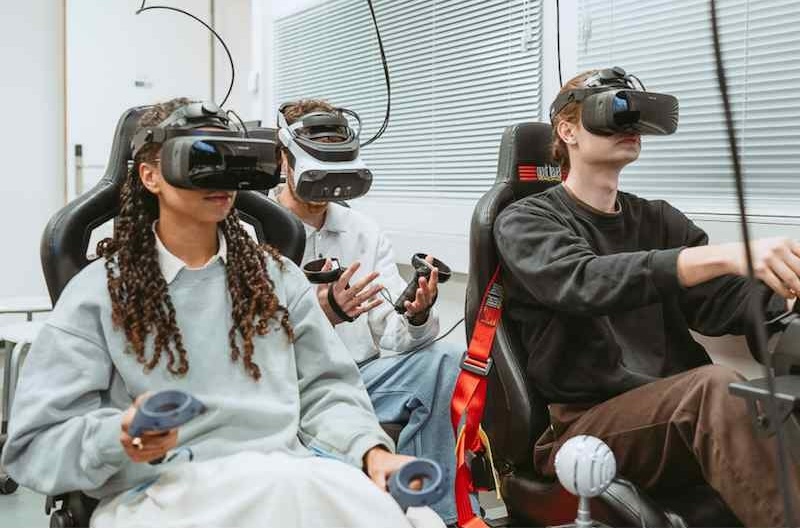
ABSTRACT Trust is a critical determinant of public acceptance of automated vehicles, particularly in situations involving uncertainty, elevated risk, or time pressure. Although much of the existing research conceptualizes trust as an individual cognitive process, the growing emergence of shared autonomous mobility highlights the need to understand how trust is constructed within groups. This study examines how situational urgency, control modality, and social interaction influence trust during shared rides in an automated vehicle. Thirty-six participants completed a within-subjects virtual reality simulation in groups of three, experiencing both automated and manual driving under low- and high-urgency scenarios. Trust was assessed through real-time button-press behavior, post-trial questionnaires, and thematic analysis of group conversations. Results showed that trust was lowest during automated low-urgency conditions and highest during manual high-urgency conditions, with button-press behavior sensitively capturing moment-to-moment loss of trust. Qualitative findings indicated that trust was co-constructed through group discussions that evaluated vehicle behavior, situational interpretation, and perceived transparency of the system. Overall, the findings demonstrate that trust in automated vehicles is both context-dependent and socially embedded. Participants displayed reduced trust in automation when situational risk was low and greater trust in manual control when urgency was high, challenging assumptions that time pressure universally promotes reliance on automation. These insights highlight the need for automated vehicles that adapt to behavioral and interpersonal trust cues in multi-occupant scenarios. trusteye-trackingmulti-agentsimulatorvirtual-realityautomated-drivingpassengerdriverpreprint