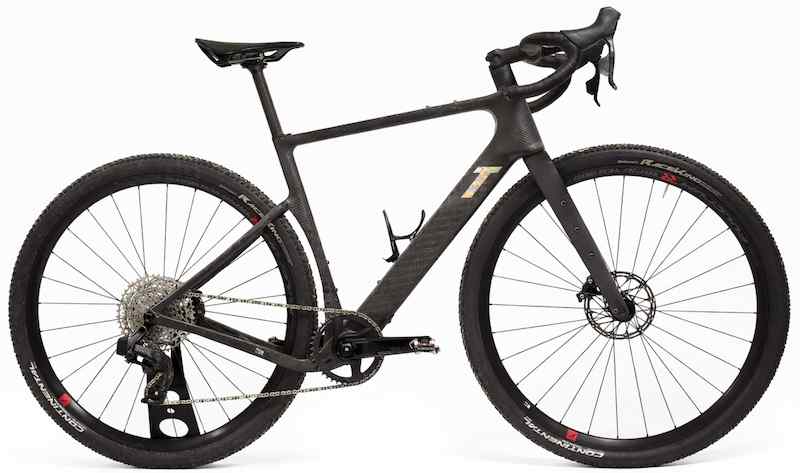
How sustainable materials are judged in motion: Designing and testing a hybrid carbon–flax composite gravel bicycle frame
Sapienza, G., Bazilinskyy, P.
Submitted for publication.
ABSTRACT High-performance bicycle frames are predominantly manufactured from carbon-fibre composites due to their favourable stiffness-to-weight ratio. However, carbon fibre production is energy-intensive, petroleum-based and difficult to recycle, raising concerns about long-term sustainability. Although vegetal and mineral fibres offer environmental benefits, their adoption in performance-oriented bicycle frames remains limited due to concerns about structural performance and user acceptance. This paper presents a design-through-making study exploring the integration of sustainable composite materials, specifically flax, hemp and basalt fibres, into a full-scale, rideable gravel bicycle frame. A hybrid composite frame was produced using filament winding and resin transfer moulding, selectively incorporating vegetal fibres while remaining compatible with industrial production constraints. Finite element simulations guided material selection, and physical stiffness testing verified structural performance against industry benchmarks. A mixed-method study with 13 experienced riders showed that judgement depended less on stiffness and more on material visibility, perceived sustainability, and trust, indicating potential for sustainable composites in performance bicycle design. cyclistdesignnaturalisticpreprint